
I thought the descriptive sections of the book (of the sea, the lighthouse, the land, the town) were quite good and there were some really beautiful passages. But, I thought the character development was lacking. And, since the main point of the plot is the moral dilemma the characters face based on their decisions, without strong character development/depth to back up those decisions, it felt like something was missing. That said, it's a really quick read and it definitely made me think about actions and consequences and what could possibly be going on inside other people's heads.
I know I shouldn't do this, but I can't help myself from comparing the characterization in this book with that of A Passage to India. I know, I know. Completely different, but reading them in such close proximity still makes me think. Why were Forster's characters so believable? Why was I totally okay with accepting Adela's relationship (even reverence?) for Mrs. Moore, when that isn't always the norm in a potential mother-in-law/daughter-in-law relationship and when there wasn't much there in the writing (it was just implied subtly)? Why did I simply accept that Mrs. Moore was and should be a respected character? Is it because the book is almost 100 years old and still significant? Is it because of the skill in writing? The style? What was it? Why did I like Fielding so much? Why did I believe the Turtons and Callendars could actually exist even though they were almost caricatures? Why was I more willing to believe the actions of these characters, where I had a hard time suspending my disbelief while reading Stedman's novel?
By the way, I read that The Light Between Oceans will be made into a film. It will be interesting to compare. I love reading books and then watching the films!
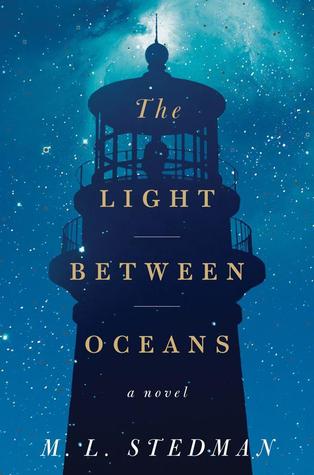
PS: I really did like the cover design of this book!


2 comments:
maybe you didn't find the characters believable because you've never experienced any of these situations before, whereas in Passage to India xenophobia and racism is everywhere.
Good point though. Also Forster spent a lot of time developing the characters through conversation, whereas stedman did the exact opposite: we saw their relationship get worse and worse because of their lack of honesty and lack of true communication.
I wonder if that was one of the points? As I was reading it dawned on me how easily relationships can deteriorate, no matter how happy you pretend to be, or how happy you act.
I guess I have the expectation that the author will have the ability to make me believe and hopefully even come to better understand something I haven't experienced, however inexplicable, fantastical, or unlikely it may be. I just felt like these characters fell flat and weren't fulfilling to me as a reader, which is probably why I had a hard time being convinced of their authenticity. However, a LOT of people would beg to differ with me because of all the positive reviews out there and, of course, the movie contract.
Post a Comment